
We make it easy for you to get cover for hard-to-insure homes in England, Scotland and Wales.
Arranging insurance for a property built with non-standard construction can be a headache. Our founder, Rob Faulkner, an ACII Chartered Insurance Broker with 30 years' experience in the UK insurance market, wanted to change that.
Non-standard home insurance often isn’t suited to purely online purchases. If you get something wrong or choose the wrong policy, it can leave you seriously out of pocket, or worse, threaten your financial future.
So Rob designed our approach to help you. Submit your details once to get advice on your situation from our underwriting partner, who will review cover from a panel of insurers (we do not share your details with multiple providers), and provide a quote from a recommended insurance provider, saving you time shopping around and ensuring you have a policy that suits your needs.
On this page, you'll find everything you need to help you arrange non-standard home insurance.
We use our preferred insurance policy as the basis of our guidance, and if another insurer is recommended, the cover will be explained to you before you buy.
If the property is empty, please visit either our Unoccupied Home Insurance or Probate Property Insurance page, where we can still consider non-standard construction.
If you have questions we haven't answered, start a chat or contact us.
Most insurers deem standard property to mean that the walls are built of brick or stone, and the roof is pitched and made of tile or slate. Many allow a small amount of the roof to be flat, such as over an extension or garage, but as soon as that exceeds 25% of the total roof area, many insurers deem it non-standard, and your online options reduce significantly.
It is then that you should consider approaching a specialist like Insuristic.
Below is a list of the key areas that we could insure that fall under this non-standard category.
Many insurers categorise property with a flat roof of more than 25% of the total as non-standard, but this varies by insurer, as some might allow up to 50%.
This is because a flat roof poses a higher risk of water buildup and leaks, which can cause substantial damage inside the property.
Flat roofs are also vulnerable to extreme weather conditions such as heavy snowfall, high winds, and hail.
Unlike with a pitched roof, water and snow have nowhere to run off, creating a pool that adds weight and stress to the roof structure, increasing the risk of structural issues, wear and tear, and leaks.
Owners of property with a flat roof will also face higher maintenance requirements, which the insurer will impose in a range of policy conditions. Typically, the following are applied, which also reinforce the importance of good maintenance:
We can consider most types of flat roofs, including:
Why not click ‘Get a Quote’ on this page to get a call with our underwriting partner, who will review cover from a panel of insurers and advise you on the best policy for your needs?
If your pitched roof isn’t made of tile (that can be clay or concrete) or slate, then you have a non-standard roof.
This is becoming more common as builders and property owners seek to improve sustainability and energy efficiency.
Our underwriters can consider roofs made of:
If your property has solar panels, provided they are permanently connected, they are covered under the buildings insurance section of the policy – but you must ensure the rebuild value you provided at the quote stage factors in their cost.
Insuring a house with a non-standard roof need not be confusing.
Request a quote to get advice and let our underwriting partner review cover from a range of insurers and recommend a suitable insurance policy.
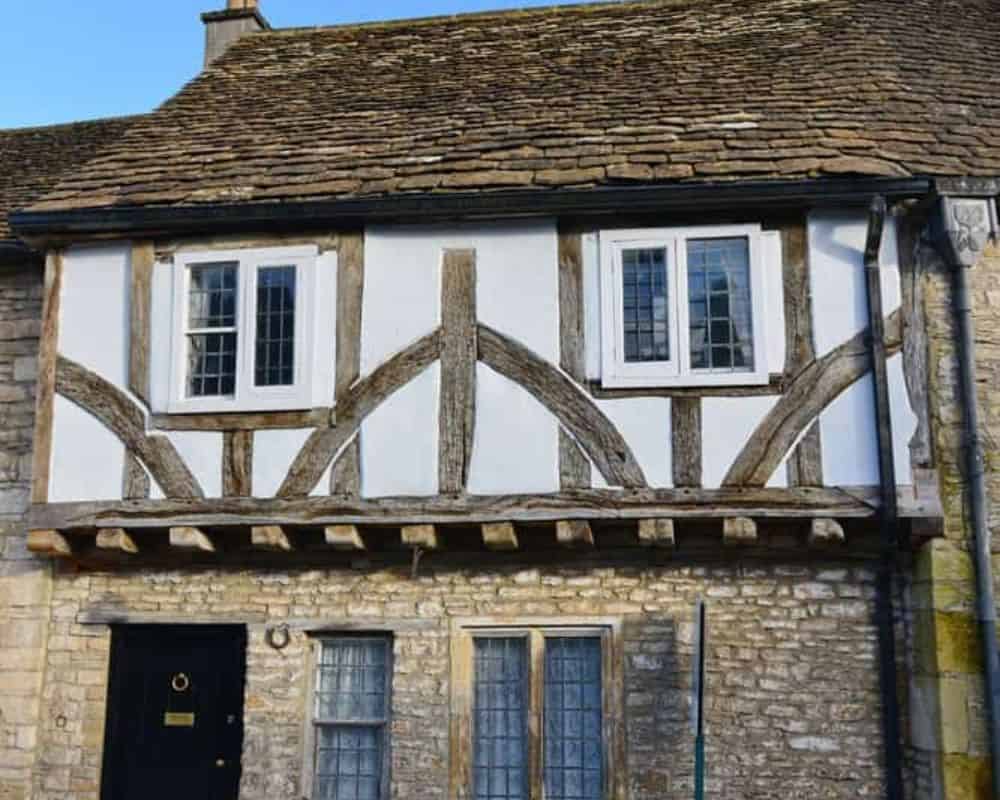
Timber frame properties are common in historical or listed buildings, the type you see with the exposed wooden beams, and the frame can be centuries old, with repair work sympathetic to the original construction, which can make it costly to repair.
They are also common in modern construction, where the structure is made of wood and finished with a brick or rendered outer skin, which is common in self-builds and increasingly in new-build housing. The timber frame might not be obvious to you, so it is worth checking.
Construction information is often found in a HomeBuyer Report or Building Survey, and sometimes in the mortgage valuation. You may also be able to find out when checking the latest energy certificate on the .GOV website.
Insurers will treat a timber frame as non-standard due to the increased risk of fire and the durability issues associated with timber, such as rot, moisture condensation, and mould, which can affect the property's structural integrity and the level of maintenance required.
There are two common policy exclusions you need to consider if your property has a timber frame: rot and infestation, which are generally not covered by insurance. The buildings also need to be kept in good repair.
A timber frame needs to be declared to insurers, and if you don’t declare this, you might find you don’t have cover when it comes to making a claim. It is easy to misdeclare a timber-frame property, particularly as many properties are brick-built. Getting a quote for a timber frame property online can be tricky, as you’ll be presented with construction questions, and you must specifically look for timber frame in the wall construction list, which may not be an obvious thing to do.
For this reason, seeking advice is recommended when insuring a timber-framed property. Don’t worry, click ‘Get a Quote’ on this page, and our underwriting partner will provide you with advice, review cover from a range of insurers and recommend a suitable policy.
There are approximately 150,000 steel frame houses in the UK, built predominantly during the 1940s to 1960s. Most were system-built to ease the post-war housing shortage, with BISF houses being the best-known example, using a steel skeleton to carry the building's weight, finished with a brick, render, or clad outer skin.
Steel frames are also used in modern construction, particularly light-gauge steel frames in newer homes and self-builds. These don't share the age-related issues of the post-war systems, but insurers will still usually treat them as non-standard construction.
From the street, a steel frame house can look identical to a brick-built one, so it is worth checking before you answer any insurer's questions. Your property's construction information is often found in a HomeBuyer Report or Building Survey, and sometimes in the mortgage valuation. You may also be able to find out when checking the latest energy certificate on the .GOV website.
Regardless of when the steel-framed property was built, the primary concern for insurers is the increased risk of corrosion it presents.
The steel frame relies on its protective coatings, and if moisture reaches the steel through damp, failed render or condensation forming within the wall structure, it can corrode out of sight, compromising the property's structural integrity.
Older systems also predate modern insulation standards, and poorly planned insulation upgrades can trap moisture against the frame rather than keep it away.
When insuring a steel-frame house, you should consider the following policy conditions:
It is for this reason that we recommend you get advice when insuring a steel-framed property, but don’t worry, our underwriting partner can help you and recommend a suitable policy picked from a panel of insurers. Just click ‘Get a Quote’ on this page to get started.
We can insure an old house built before 1900, whether it is of standard or non-standard construction. An old house doesn’t automatically mean it is non-standard; what matters is how it was built, though the likelihood increases the older it is.
Examples of features that make a property non-standard include stone, cob or timber-framed construction, and thatched roofs.
It is also important to get the property's age right during the quoting stage, as this will influence the underwriter's pricing approach and whether they will agree to insure. Get it wrong, and it could invalidate your cover.
If you don’t know the property's age, Insuristic has written a useful guide: How to find out when a house was built, which may help you.
Insuring an older property doesn’t need to be difficult; Click ‘Get a Quote’ on this page to arrange a call with our underwriting partner, who will provide you with advice, review cover from a panel of insurers, and then recommend a suitable policy.
Prefabricated houses and concrete houses are classed as non-standard construction. Many are steel- or timber-framed.
After World War II, hundreds of thousands of prefabricated homes were rapidly built to ease the housing crisis. These were typically either steel-framed, such as the BISF houses covered in the steel frame section above, or PRC (Pre-Cast Reinforced Concrete) homes.
PRC homes need particular care. Many PRC house types were designated defective under housing defects legislation in the 1980s, after structural problems were found in the concrete.
As a result, most mortgage lenders will not lend on a PRC home unless it has been repaired to an approved standard, and you need a PRC repair certificate as evidence. If you own or are buying one, that certificate matters to both your insurer and your lender.
Not all post-war-era concrete homes are prefab: some, such as Wimpey No-Fines and Laing Easiform houses, were cast in situ, with the concrete poured on site rather than made in a factory.
These were never designated defective, so there's no repair certificate to worry about, but insurers will still treat them as non-standard construction. This is partly because concrete doesn't show its problems the way brick does; moisture reaching the steel reinforcement inside can cause hidden deterioration that isn't visible until the damage is advanced, which is why insurers ask more questions and may want a survey.
But owning a prefab isn't restricted to the post-war period; many modern self-build and designer homes are prefabricated. The following are common:
The market for insuring these types of property is restrictive because they are often more expensive to repair and pose a higher risk of issues such as fire and subsidence. Insurers may also require a property survey.
Click ‘Get a Quote’ on this page to arrange a call with our underwriters, who can provide advice, review cover from a panel of insurers and recommend a suitable policy for your needs.
We can help you arrange thatched-roof insurance, including for thatched cottages, listed thatched properties, and partially thatched homes.
The market for thatched-home insurance is among the most restrictive in UK property insurance, and this is one situation where advice is recommended.
Insurers are mostly concerned about fire as it spreads with thatch quickly and can result in a total loss of the property. Reinstating the roof is also very expensive, as rethatching is skilled, slow work carried out by accredited thatchers, so both the fire damage risk and the rebuild cost can be high, which is why most online insurers decline thatched properties altogether.
There will be specialist conditions in the policy such as:
As fires can cause significant damage, it is also important that you do not underinsure the buildings, as this could result in a significant financial loss in the event of a claims shortfall. It is recommended that you obtain a RICS rebuild valuation and have it updated regularly.
Tell us about your thatched property once, and our underwriting partner will provide advice, approach specialist insurers of thatched property, saving you time, before recommending a suitable policy to you.
Comparison sites usually don’t compare non-standard home insurance. This is because policy conditions, requirements, and excesses vary by insurer, making it impossible to compare the quotes like-for-like.
The comparison sites will generally hand you off to a partner who will quote you over the phone. These can be a mix of insurance brokers and direct insurers, which means you could end up with lots of phone calls and may not receive advice, a common issue with insurers and brokers offering just one product. So, the opposite of the one-call approach we are offering.
So why not click ‘Get a Quote’ and speak to our underwriting partner today? You will get advice and recommendations for a suitable insurance policy picked from a range of insurers.
When arranging cover for a non-standard home, it helps to have the following information ready before a call:
Don't worry if you don't have everything to hand, the underwriter will guide you through the call and let you know if any additional information is needed, such as survey reports, inspection evidence or repair certificates
1. You will be asked to complete a quote form, along with your contact details and availability for a call.
2. When you have submitted your details, you will also be presented with a screen including the name of the underwriter and their direct contact details.
3. The underwriter will discuss your circumstances and the details of the property to be insured in order to approach a range of suitable insurance providers.
4. You will receive a call with the quotes, advice on your options, and a recommended insurer (usually within one working day). You will also receive an email explaining your needs and how they have been met (called a Demands and Needs statement).
5. You can usually arrange cover the same day as you received your quote. The policy will be purchased directly from the underwriter, with the option to pay monthly or annually. You will communicate directly with the underwriter at renewal, and if you need to make policy changes or cancel your policy.
6. Renewals will be sent by the underwriter to you approximately 30 days prior to renewal.
7. If you need to make a claim, our underwriters have a specialist team who can provide you with advice and guidance from the point of notification to settlement.
Our underwriting partner is SJL (Worcester) Ltd, trading as SJL Insurance Services. They underwrite on behalf of a range of insurers, including Lloyd’s Syndicate 4444, which is managed by Canopius Managing Agents Limited.
Where a property does not fit one of SJL's many policies that are underwritten in-house, they can approach a range of insurance providers on your behalf.
If you need to make a claim on your non-standard home insurance policy, our specialist claims team at SJL Insurance Services is just a phone call away.
What you can expect from our claims service:
Check out our short guide on what is involved in making a claim.

Rob Faulkner is an ACII Chartered Insurance Broker with 30+ years' experience in the UK insurance market. He is also a Chartered Manager and a Member of the Chartered Institute of Marketing.
As the founder of Insuristic, Rob has developed clear, flexible insurance solutions for property owners, including those whose homes fall outside what standard insurers are willing to cover.
He writes regularly on property and business insurance, with a particular focus on non-standard home insurance, probate insurance, probate risk management, unoccupied home insurance and other areas where he brings deep expertise.
Rob is especially passionate about product development and insurance education, helping people understand what they are buying. These values shape everything we do at Insuristic.
Want to learn more? Visit About Rob Faulkner or follow Rob on LinkedIn.

Insuristic Limited is an Appointed Representative of SJL (Worcester) Ltd, who are authorised and regulated by the Financial Conduct Authority with the reference number 991835. This can be checked by visiting https://register.fca.org.uk/s/.
Registered Office: Unit 2, 262 Walsall Road, Cannock, England, WS11 0JL. Registered in England and Wales No: 13926650.
Insuristic is a registered trademark. ©Copyright 2023 Insuristic Limited. All Rights Reserved.